Shopify 2025: Ultimate Guide to Costs, Profits & Starting an Ecommerce Business
Everything you need to know about starting a Shopify store in 2025, from updated costs and fees to profit potential and AI-powered strategies
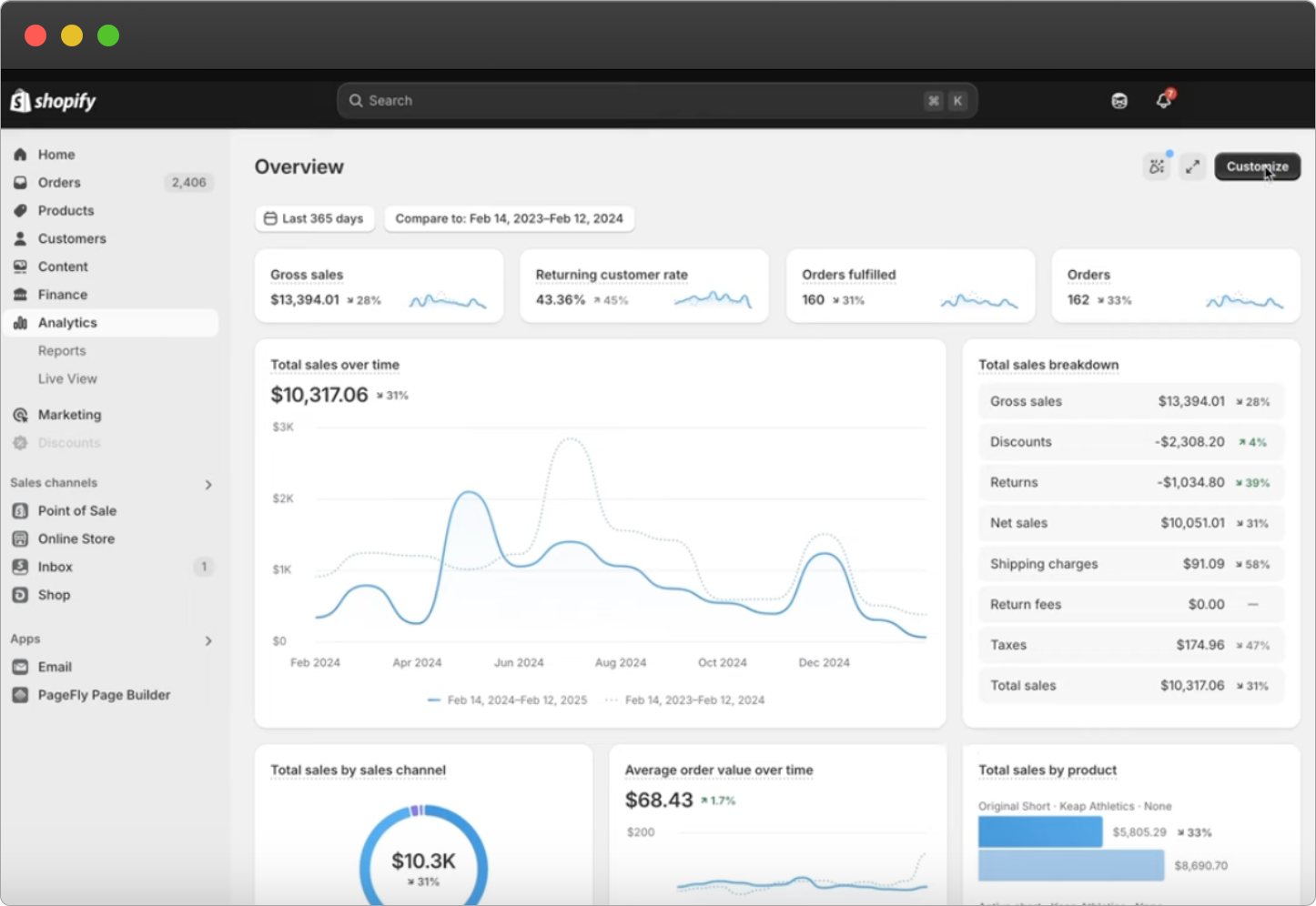
Introduction to Shopify in 2025
As we move through 2025, Shopify continues to dominate the ecommerce platform market, now powering over 2.3 million businesses globally. The platform has evolved significantly with AI integration, enhanced mobile capabilities, and more sophisticated analytics tools. Whether you're looking to start a side hustle or build a full-time business, Shopify provides the tools to create and manage an online store with relative ease.
How Much Does It Cost to Start a Shopify Store in 2025?
The cost to start a Shopify store in 2025 ranges from as little as $1 for the first three months to several thousand dollars, depending on your business model and scale. Let's break down the current costs:
Shopify 2025 Pricing Plans
$34/month (after trial) - increased from $29 in 2023
$89/month - increased from $79 in 2023
$329/month - increased from $299 in 2023
Starting at $2,000/month
Initial Setup Costs for 2025
- Domain name: $12-$18/year (slight increase due to inflation)
- Theme: Free-$220 (premium themes have increased in price)
- Apps: $0-$70/month (more AI-powered apps at premium prices)
- Initial inventory: $0-$600+ (dropshipping vs holding inventory)
- Marketing budget: $75-$600+ to start (ad costs have increased)
- Business registration: $50-$300 (depending on your location)
According to Shopify's official pricing page, they continue to offer promotional rates for new stores, including the popular $1/month for the first 3 months deal, though sometimes with slightly different terms than previous years.
Can a Beginner Make Money on Shopify in 2025?
Yes, beginners can absolutely make money on Shopify in 2025! While the ecommerce landscape has become more competitive, opportunities still abound for those who approach it strategically. The key is understanding the current market dynamics and leveraging new tools like AI.
2025 Success Factors
- AI-powered product research
- Video-first marketing strategy
- Mobile-optimized store design
- Personalization and customer experience
- Sustainability and ethical business practices
2025 Beginner Advantages
- AI tools reduce learning curve
- More integrated payment options globally
- Better mobile management capabilities
- Enhanced analytics for data-driven decisions
- More sophisticated automation tools
2025 Trend Alert: The most successful new Shopify stores are leveraging AI for product selection, marketing copy, and customer service. Video commerce and social shopping integrations are also driving significant growth.
Understanding Shopify Fees in 2025
Shopify's fee structure has undergone some changes in 2025, particularly with the expansion of Shopify Payments to more countries and updated transaction fees.
How Much Does Shopify Take from a $100 Sale in 2025?
For a $100 sale, Shopify's transaction fees depend on your plan and payment processor:
| Plan | Transaction Fee | Credit Card Rate | Total Fees on $100 Sale |
|---|---|---|---|
| Basic Shopify | 2.2% | 2.9% + 30¢ | ~$5.40 |
| Shopify | 1.1% | 2.6% + 30¢ | ~$4.00 |
| Advanced Shopify | 0.6% | 2.4% + 30¢ | ~$3.30 |
Note: These fees are in addition to any payment processor fees if you're not using Shopify Payments. Using Shopify Payments eliminates the additional transaction fees. International transactions may incur additional fees of 1.5%.
Why Is Shopify Asking for $5000? Understanding Payment Reserves in 2025
Some users report Shopify requesting substantial deposits or reserves. This typically happens in these scenarios:
Reasons for Large Deposits in 2025
- High-risk products: Items with high chargeback rates (CBD, supplements, etc.)
- New businesses: Lack of established sales history
- Sudden sales spikes: Unusual activity patterns that trigger fraud alerts
- Payment processor requirements: Shopify Payments risk assessment
- International sellers: Additional scrutiny for cross-border transactions
According to Shopify's 2025 documentation, payment reserves are temporary measures that are typically reviewed every 45-60 days based on your store's performance and order fulfillment metrics.
Is Starting a Shopify Business Worth It in 2025?
Despite increased competition and advertising costs, starting a Shopify business in 2025 can still be highly profitable with the right strategy. The key is niching down, leveraging emerging technologies, and providing exceptional customer experiences.

Pros of Shopify in 2025
- Enhanced AI capabilities for store optimization
- Improved mobile editing and management
- Expanded global payment options
- Better integration with social commerce platforms
- More sophisticated analytics and reporting
Cons of Shopify in 2025
- Increased competition in most niches
- Higher advertising costs than previous years
- More complex SEO requirements
- Premium apps adding to monthly costs
- Consumer expectations for fast shipping
Can I Build My Shopify Store Without Paying in 2025?
Yes, you can build and customize your Shopify store without paying during the free trial period, which is now typically 3 days (though sometimes extended promotions are available). However, to accept orders and make your store live, you'll need to select a paid plan.
2025 Free Trial Limitations
- 3-day free trial (sometimes extended offers available)
- Can't accept real orders during trial
- Limited access to certain premium apps
- Payment processing not activated
- Limited analytics during trial period
Many successful store owners use the trial period to completely set up their store before committing financially. In 2025, Shopify has improved the trial experience with more features available during the testing phase.
How Hard Is It to Make Money on Shopify in 2025?
Making money on Shopify in 2025 requires more strategy and effort than in previous years but remains achievable. Success now depends on finding underserved niches, leveraging emerging platforms, and utilizing AI tools effectively.

Etsy vs Shopify: Which Is Better in 2025?
The choice between Etsy and Shopify in 2025 depends on your business model, with both platforms having evolved significantly:
| Factor | Etsy | Shopify |
|---|---|---|
| Built-in audience | Yes (over 120 million active buyers) | No (you drive your own traffic) |
| Fees | Listing fees + 6.8% transaction fee + payment processing | Monthly plan + payment processing |
| Customization | Limited (improved but still restricted) | Extensive (especially with Online Store 3.0) |
| Brand control | Limited (you're within Etsy's ecosystem) | Complete (your own brand, your rules) |
| Best for | Handmade, vintage, craft items | Branded products, dropshipping, scaling |
How to Calculate Shopify Fees in 2025
Calculating your potential Shopify fees is essential for pricing your products correctly. Here's the updated formula for 2025:
2025 Fee Calculation Formula
Total Fees = Monthly Plan + Transaction Fees + Payment Processing Fees + App Costs + Additional Services
For example, on the Basic Shopify plan with $5,000 in sales:
- Monthly plan: $34
- Transaction fees (2.2%): $110
- Payment processing (2.9% + $0.30 per transaction): ~$180
- Apps: ~$40
- Total: ~$364
AI-Powered Shopify Strategies for 2025
In 2025, artificial intelligence has become integral to successful Shopify stores. Here are the most effective ways to leverage AI:
Product Research AI
- Trend prediction algorithms
- Competitor analysis tools
- Demand forecasting
- Pricing optimization
Marketing AI
- Automated ad copy generation
- Customer segmentation
- Predictive customer lifetime value
- Personalized email campaigns
Operations AI
- Inventory management
- Dynamic shipping optimization
- Fraud detection
- Customer service chatbots
Content AI
- Product description generation
- SEO optimization
- Blog content creation
- Social media content planning
Step-by-Step Guide to Starting Your Shopify Store in 2025
Follow this detailed 10-step process to launch your Shopify store successfully in today's competitive landscape:
Market Research and Niche Selection
Before anything else, identify a profitable niche using AI tools like Trend Hunter, Google Market Finder, and social media analytics. Consider emerging trends like sustainable products, personalized items, and niche hobbyist gear.
Business Planning
Create a simple business plan outlining your target audience, products, pricing strategy, marketing approach, and financial projections. Use AI-powered tools for market sizing and competitive analysis.
Register Your Business
Decide on a business structure (sole proprietorship, LLC, etc.) and register your business name. Obtain any necessary licenses or permits for your location and industry.
Set Up Your Shopify Account
Sign up for Shopify's free trial and choose your plan. Select a memorable domain name either through Shopify or a third-party provider like Namecheap.
Customize Your Store Design
Choose a professional theme (free or premium) and customize it to match your brand. Ensure your store is mobile-responsive, easy to navigate, and visually appealing.
Add Products and Set Up Payments
Add your products with high-quality images, detailed descriptions, and competitive pricing. Set up payment gateways (Shopify Payments is recommended to avoid extra fees).
Configure Shipping and Taxes
Set up shipping zones, rates, and delivery options. Configure tax settings based on your location and where you'll be selling.
Install Essential Apps
Enhance your store's functionality with key apps for email marketing, reviews, analytics, and customer service. Start with free options and upgrade as needed.
Test Your Store
Before going live, place test orders to ensure the checkout process works smoothly. Check all links, forms, and functionality across different devices.
Launch and Market Your Store
Develop a marketing strategy using social media, content marketing, email campaigns, and potentially paid advertising. Consider offering a launch promotion to generate initial sales.
Recommended 2025 Resources
Frequently Asked Questions (2025 Edition)
You can start a Shopify store for as little as $1 for the first 3 months (promotional offer), then $34/month for the Basic plan. Additional costs may include apps ($0-70/month), domain name ($12-18/year), marketing budget, and potential inventory costs.
Yes, beginners can make money on Shopify in 2025. While it requires learning and effort, many successful store owners started with no prior experience. Key factors include product selection, marketing strategy, and leveraging AI tools.
On the Basic Shopify plan, fees would be approximately $5.40 ($2.20 transaction fee + $2.90 + $0.30 credit card processing). Higher-tier plans have lower transaction fees.
Shopify may request a reserve for new stores, high-risk products, or accounts with unusual activity. This is a security measure against potential chargebacks and is usually temporary, reviewed every 45-60 days.
For many entrepreneurs, yes. Shopify provides a relatively low-cost way to start an ecommerce business with robust features. Success depends on your products, marketing strategy, and execution in the current competitive landscape.
You can build and customize your store during the free trial period without paying, but you'll need to select a paid plan to accept orders and make your store live.
Ready to Start Your Shopify Journey in 2025?
Starting a Shopify store in 2025 can be an exciting and profitable venture if approached correctly. Begin with a clear plan, realistic expectations, and commitment to learning. Take advantage of Shopify's free trial to explore the platform, and don't be afraid to start small and scale as you learn what works for your business.
Remember that success rarely happens overnight. Most profitable Shopify stores result from continuous testing, learning, and optimization over time. Leverage AI tools, focus on customer experience, and stay updated with the latest ecommerce trends to maximize your chances of success.

0 Comments
Comment your problems without sing up